How a 360 Body Lift Differs from a Tummy Tuck
A 360 body lift and a tummy tuck are both body contouring procedures, but they are not the same. A tummy tuck, also called abdominoplasty, mainly focuses on the front of the abdomen. It can remove excess abdominal skin, tighten the abdominal area, and in many cases address muscle separation when appropriate.
A 360 body lift takes a broader approach. Instead of treating only the front of the abdomen, it addresses loose skin around the entire lower torso. This can include the abdomen, flanks, lower back, outer hips, and buttock area. Because the procedure works circumferentially, it can be especially helpful for patients whose loose skin wraps around the body after major weight loss.
For some patients, a tummy tuck may be enough to address their main concerns. For others, treating only the front of the abdomen may leave significant laxity at the sides or back. In those cases, a circumferential body lift may create a more balanced result because it considers the torso from every angle.
Patients comparing these options can learn more about abdominoplasty on our Tummy Tuck page or review our Tummy Tuck After Weight Loss blog for more information about abdominal contouring after weight changes.
Who Benefits from Circumferential Body Contouring?
Circumferential body contouring is most often considered by patients who have lost a significant amount of weight, either through lifestyle changes, medication-assisted weight loss, or bariatric surgery. After major weight loss, the skin may not fully contract to the body’s new shape, leaving folds or loose tissue around the abdomen, waist, hips, and lower back.
A good candidate for a 360 body lift is usually someone who has maintained a stable weight, is medically suitable for surgery, and has realistic expectations about the procedure, scars, recovery, and results. This procedure is not designed for weight loss. It is intended to remove excess skin and improve body contour after weight loss has already occurred.
Patients may benefit from a 360 body lift if they have loose skin that hangs around the lower abdomen, extends around the sides, or continues into the lower back. Some patients also notice that clothing does not fit comfortably because of excess skin folds, even after reaching a healthier or more stable weight.
During your consultation, Dr. Stephanie Dreckmann can evaluate whether the concern is mainly excess skin, residual fat, tissue laxity, or a combination. This distinction matters because liposuction alone cannot remove loose skin, while a body lift is specifically designed to address circumferential skin laxity.
What the Procedure Involves
A 360 body lift usually involves removing excess skin and tissue around the lower torso. The incision typically extends around the body, allowing the surgeon to improve the front, sides, and back in a coordinated way. The exact incision pattern and surgical plan depend on the patient’s anatomy, skin quality, previous scars, and goals.
The procedure may improve the lower abdomen, waist, flanks, lower back, outer hips, and buttock area. For post-weight-loss patients, the goal is often to reduce hanging skin, smooth the contour, and improve the way the torso transitions into the lower body.
Because a 360 body lift is more extensive than many other body contouring procedures, planning is especially important. The surgical team must consider operating time, positioning, incision placement, blood supply, recovery needs, and whether the patient would benefit from one procedure or staged surgery.
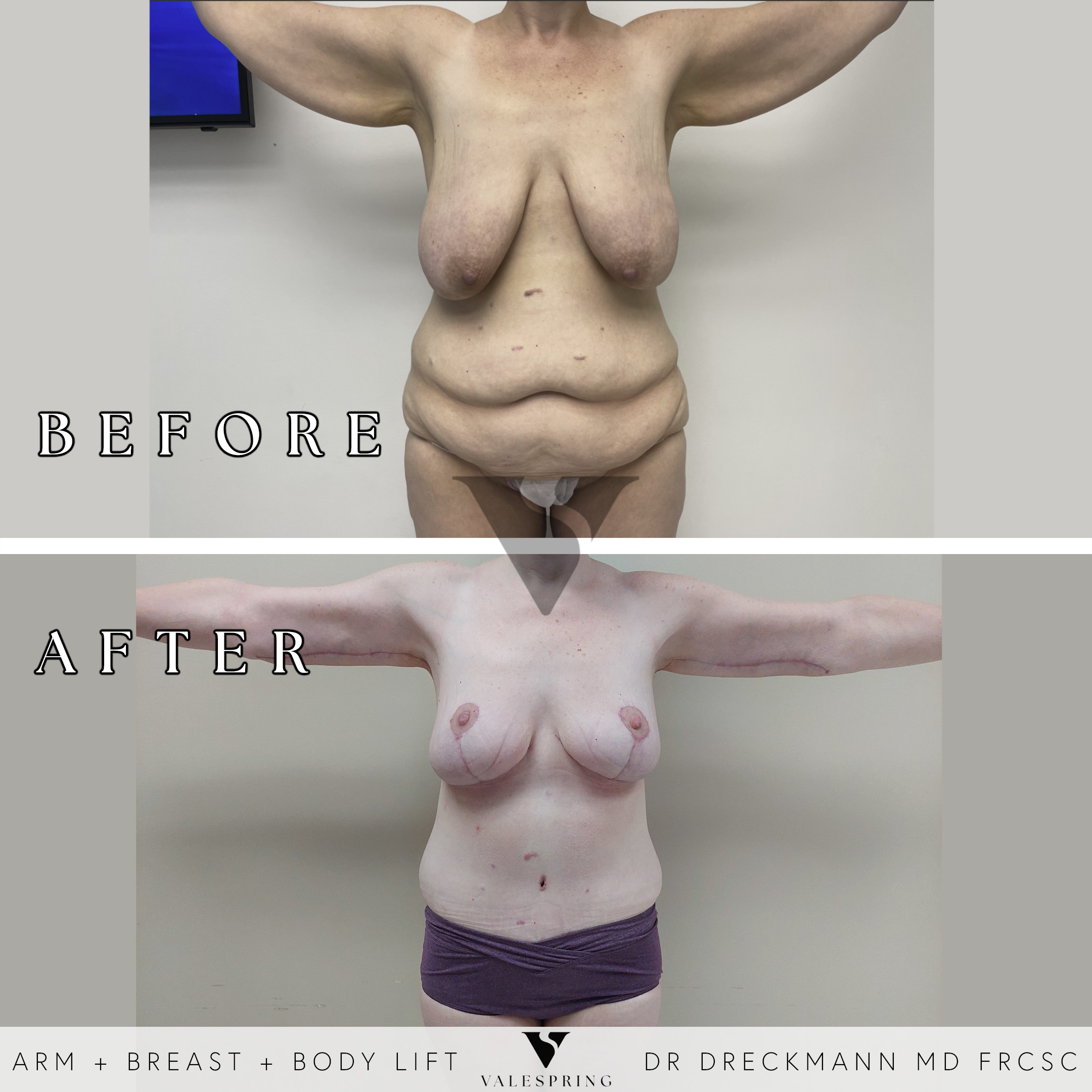
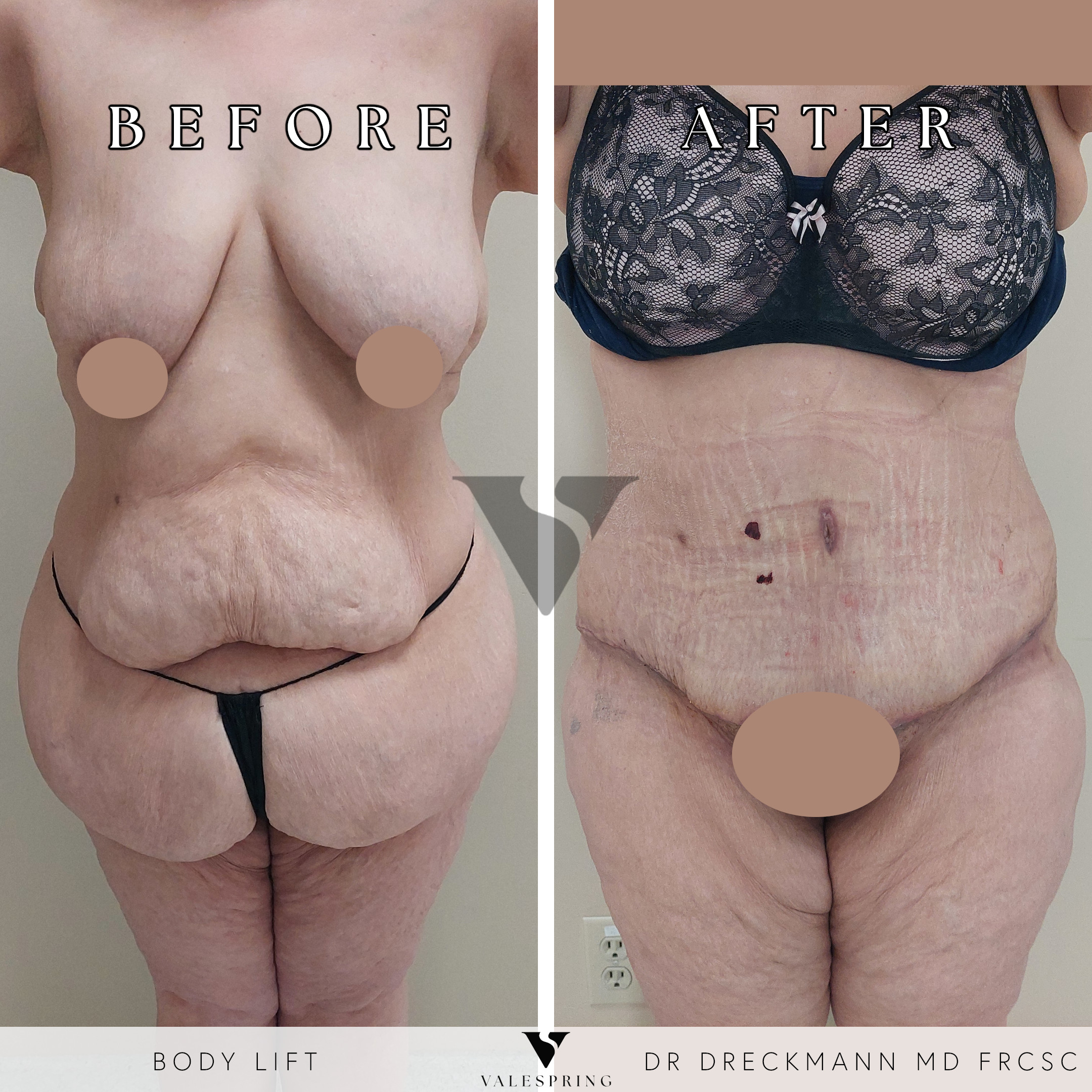
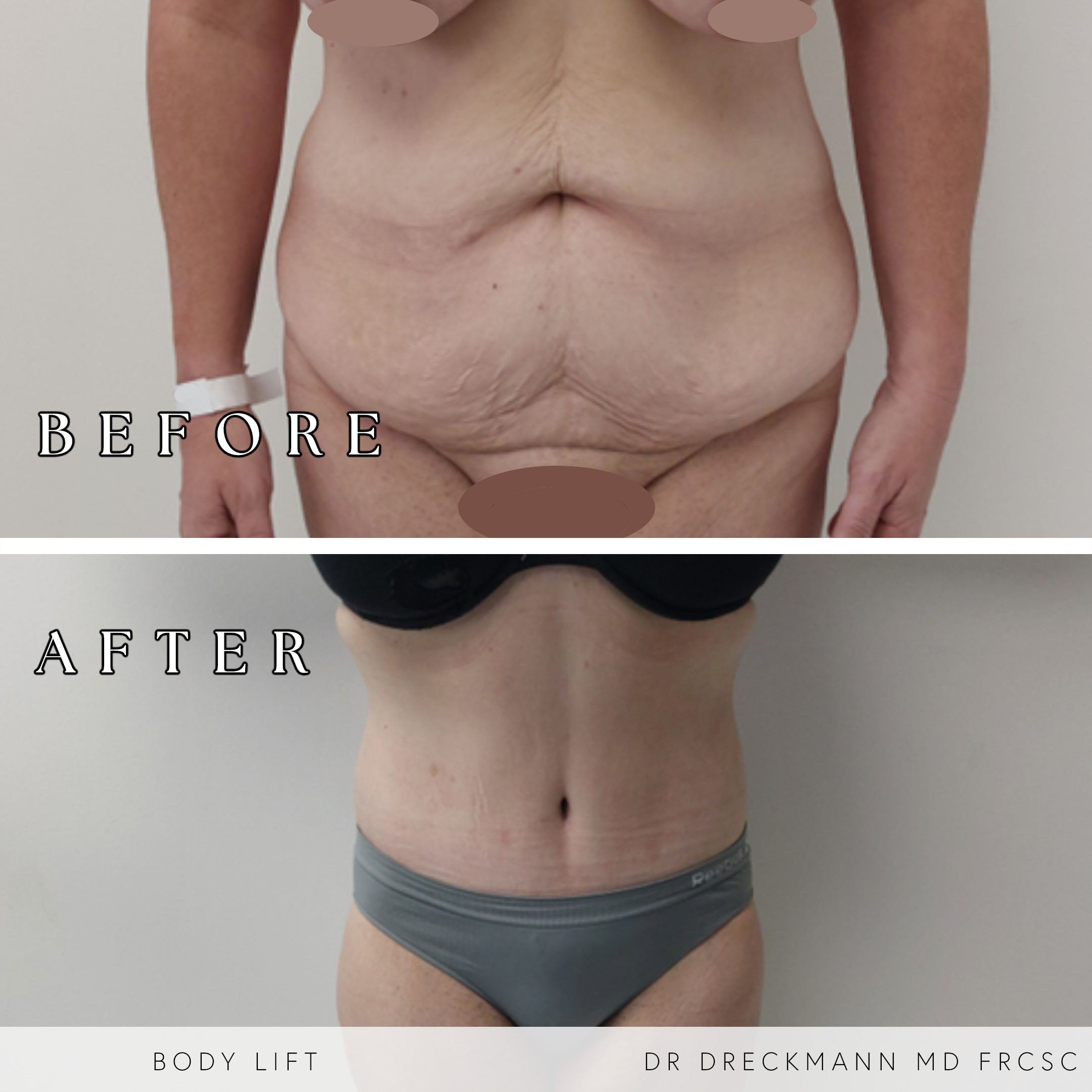
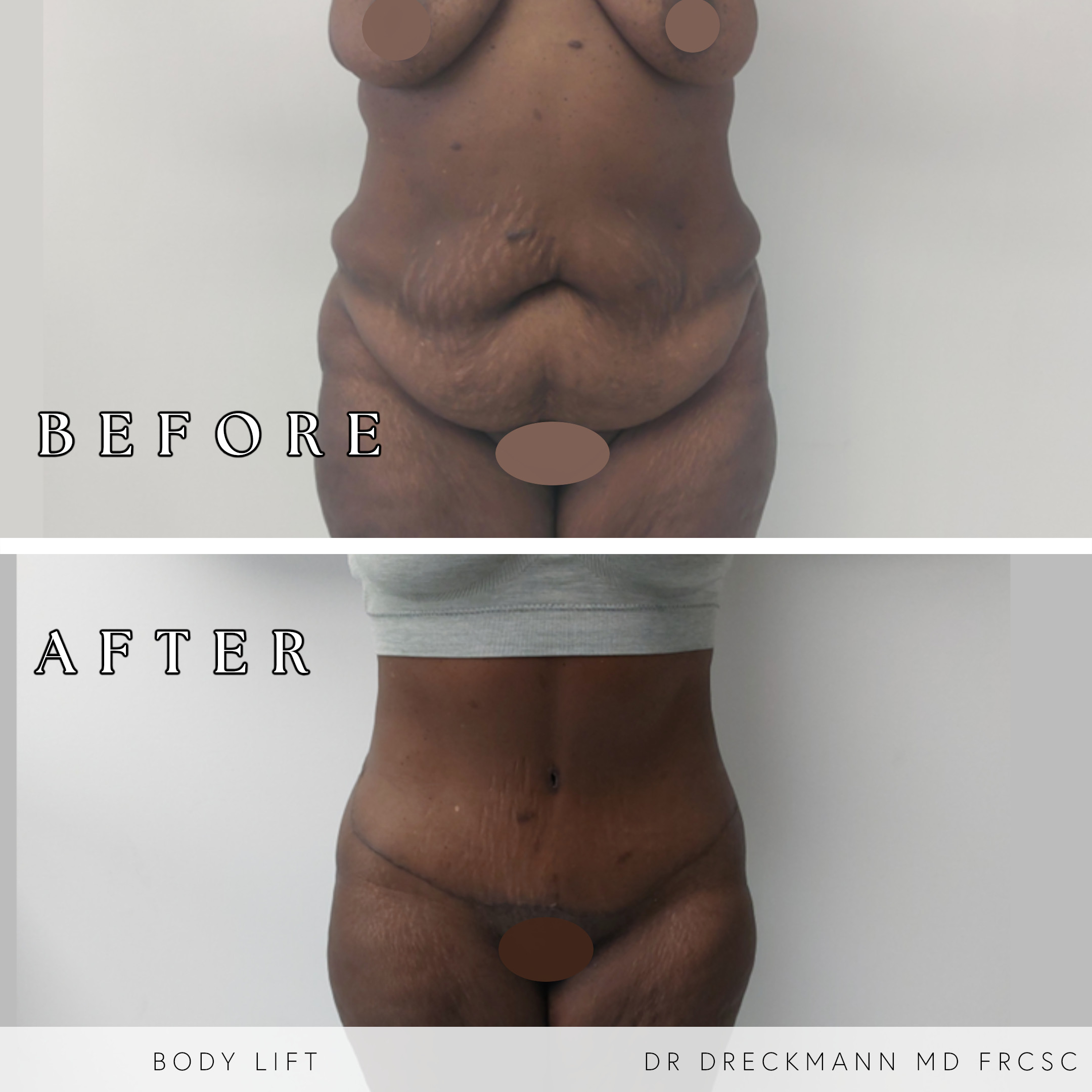
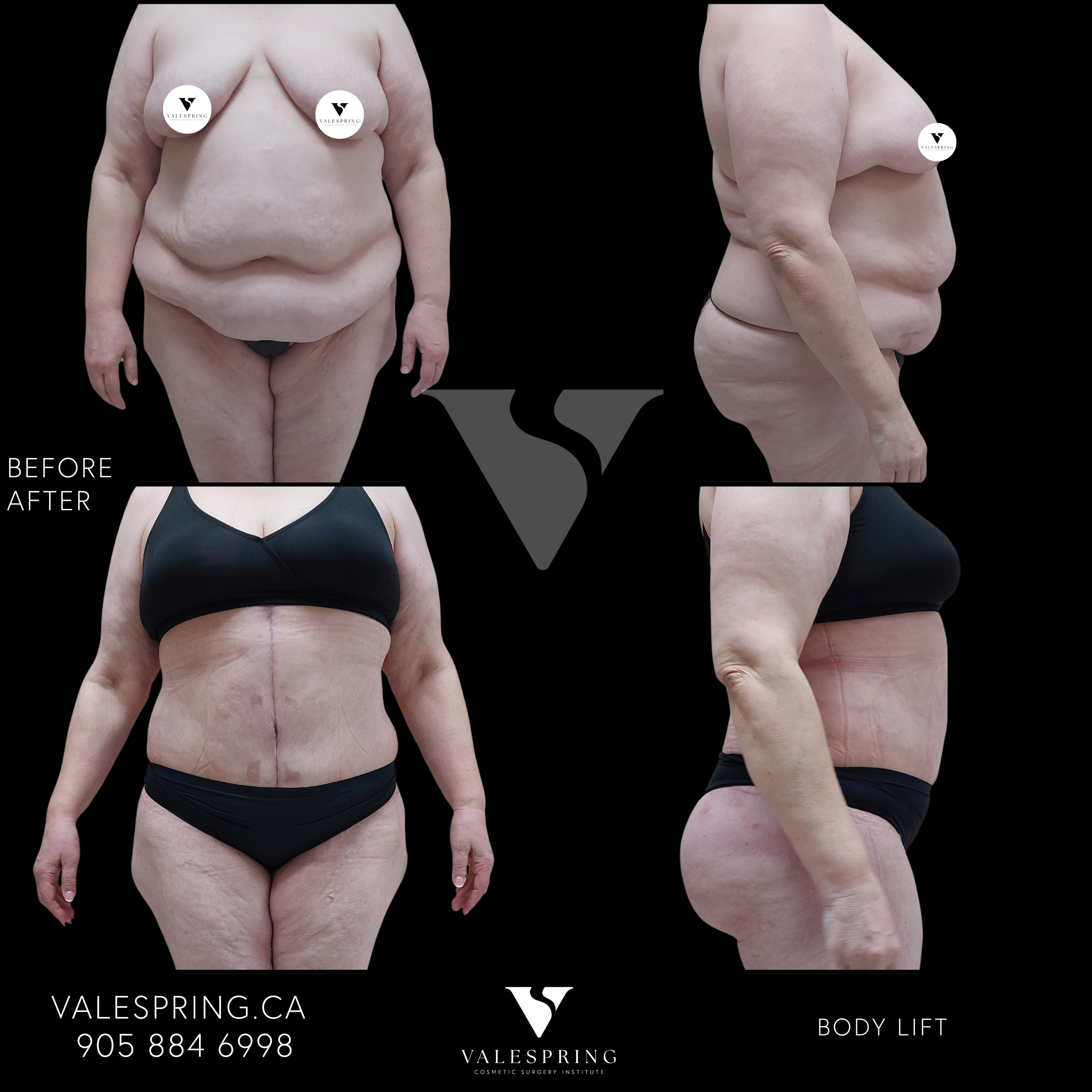
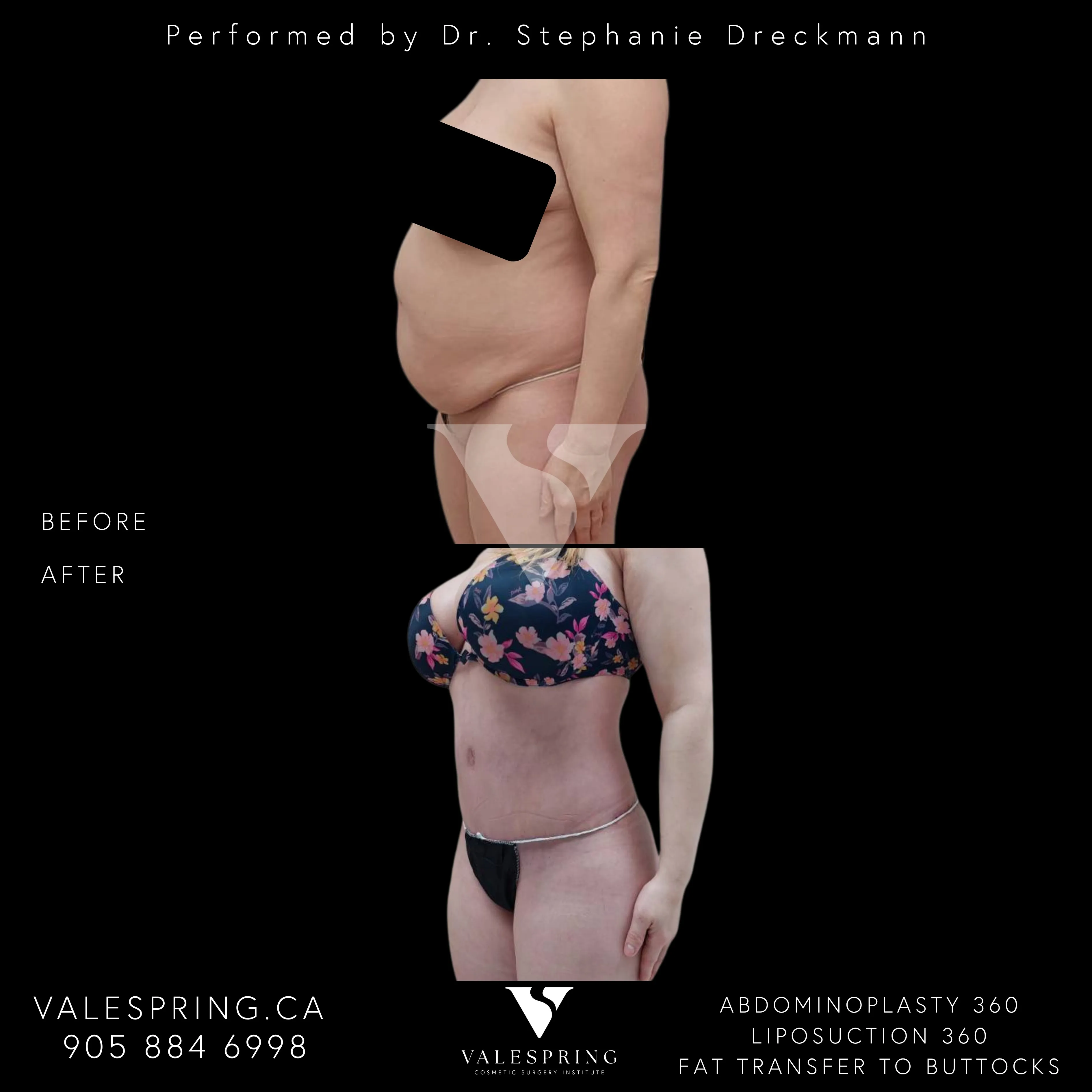
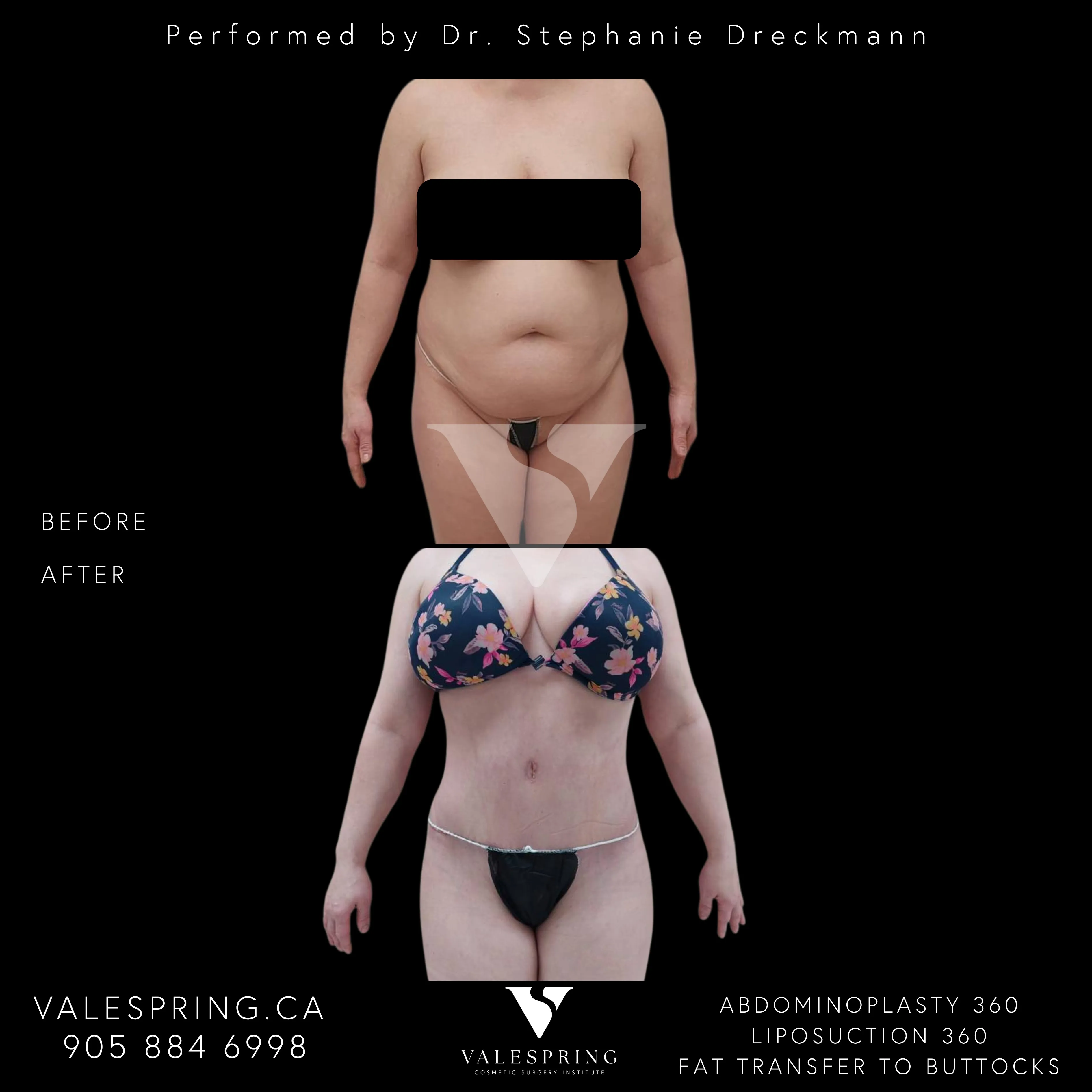
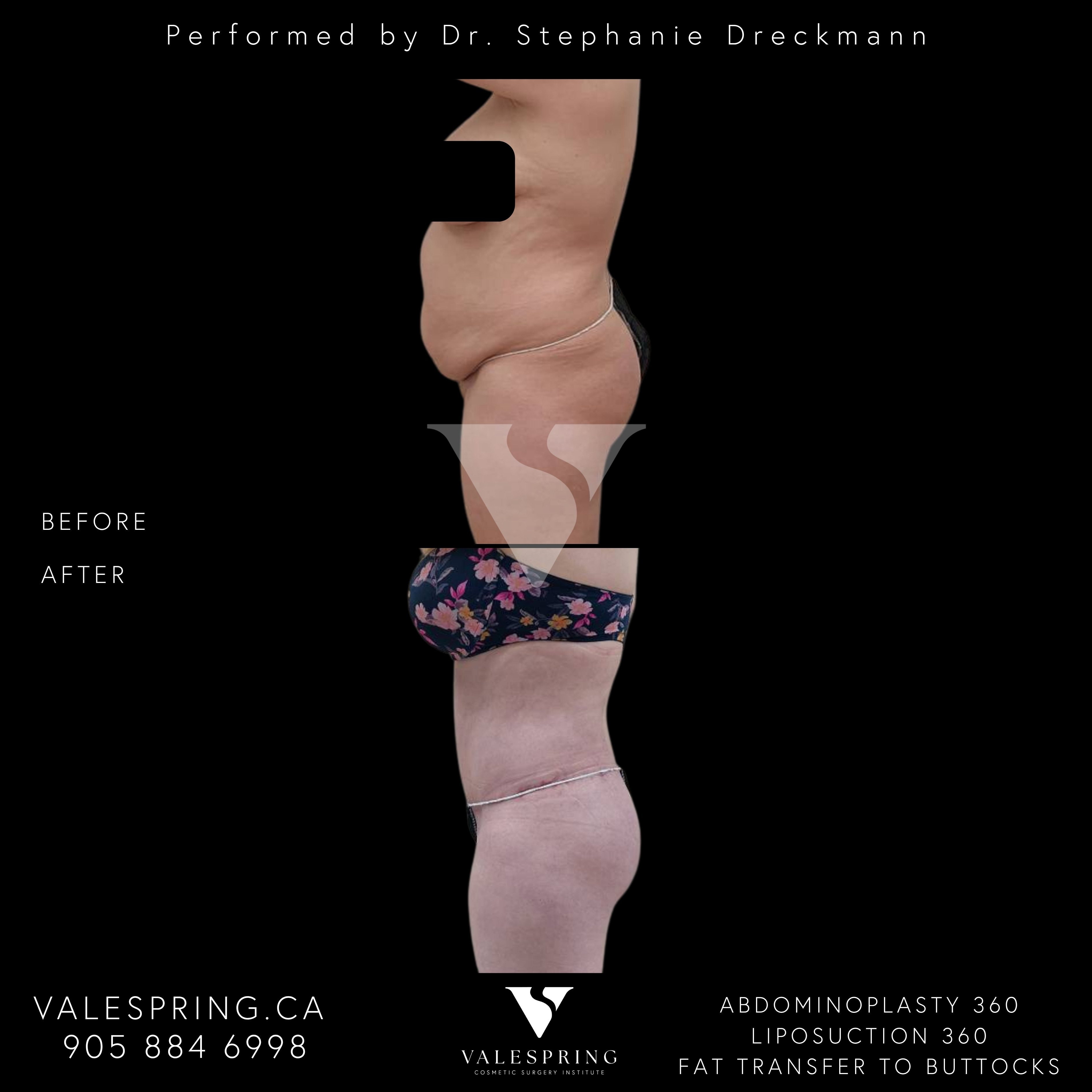
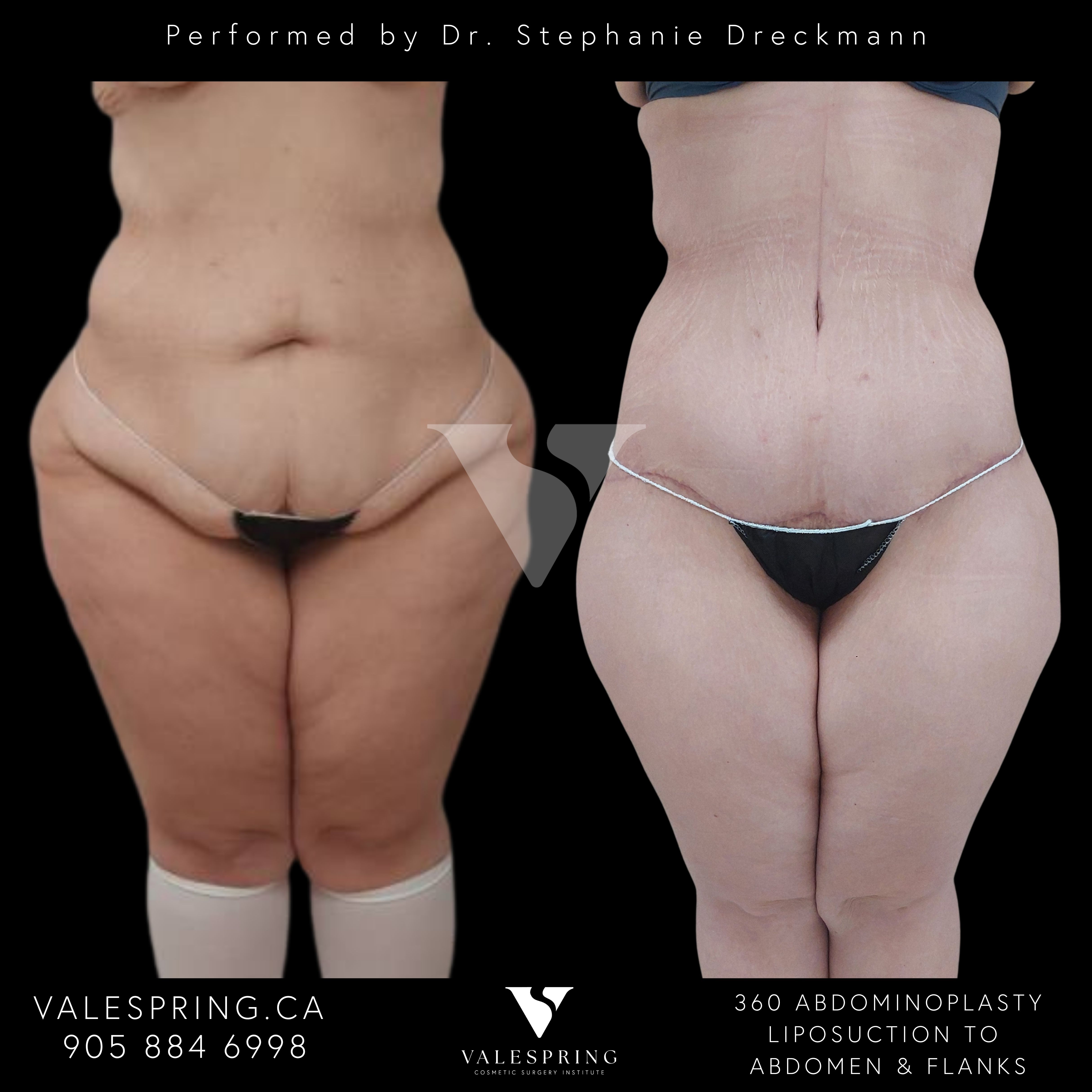
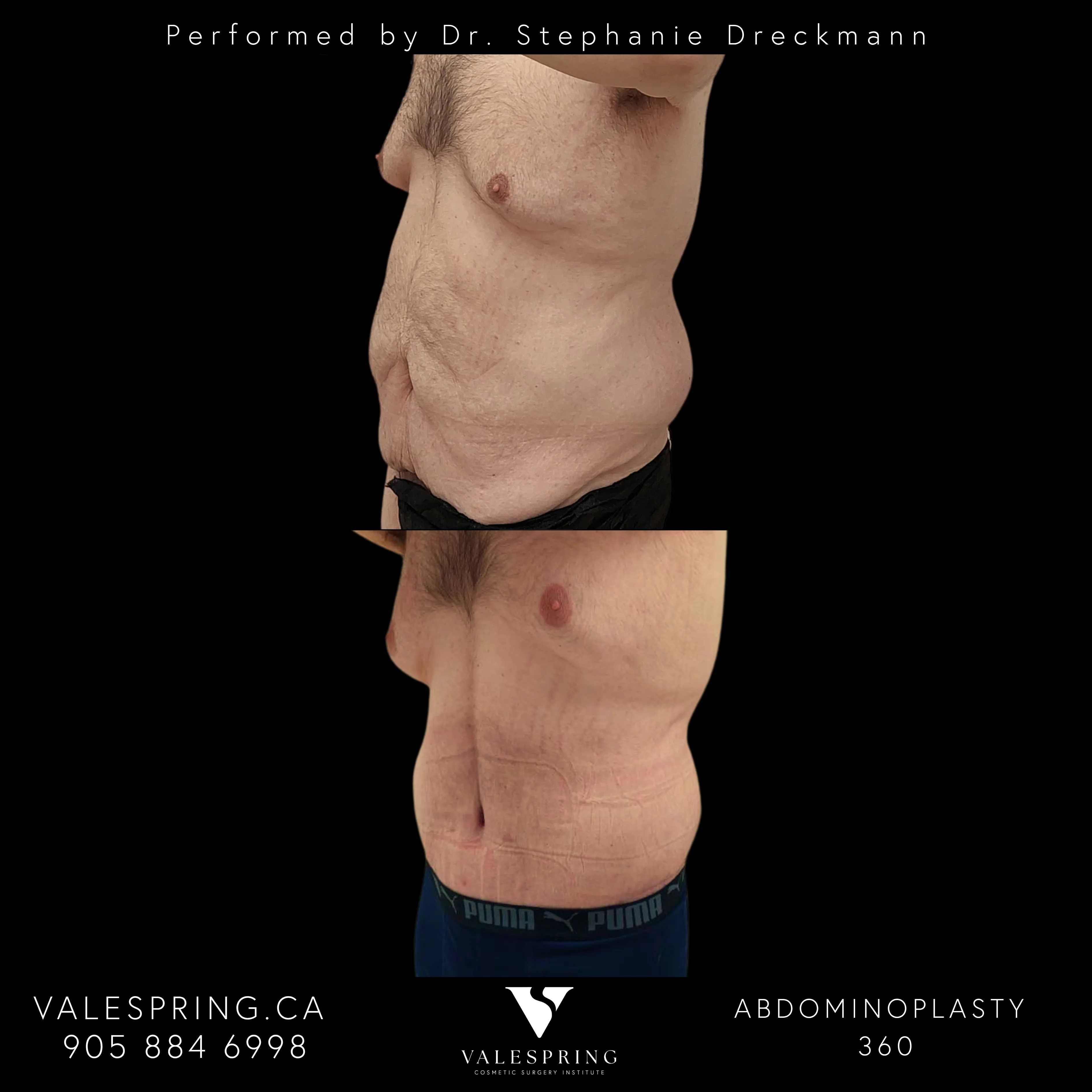
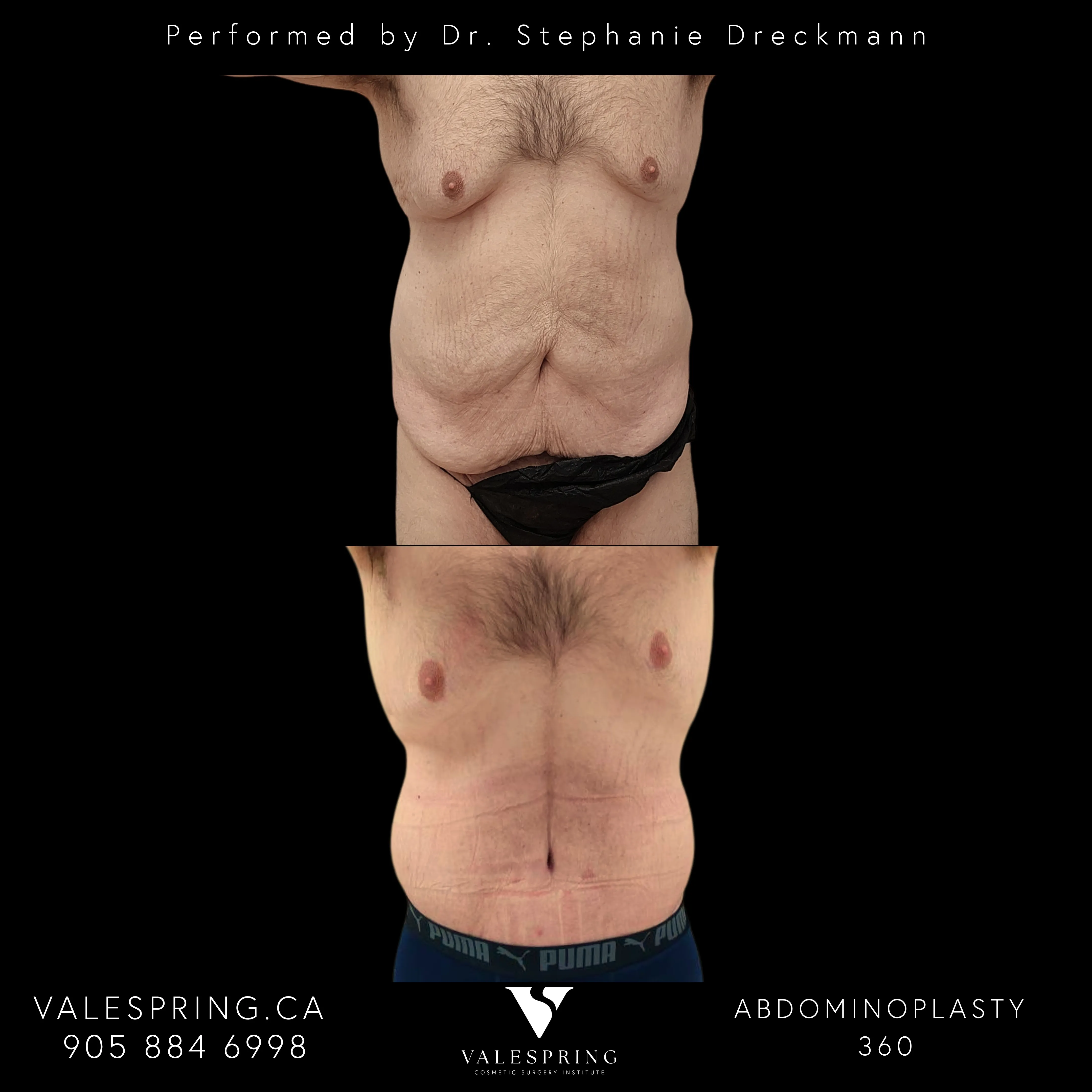
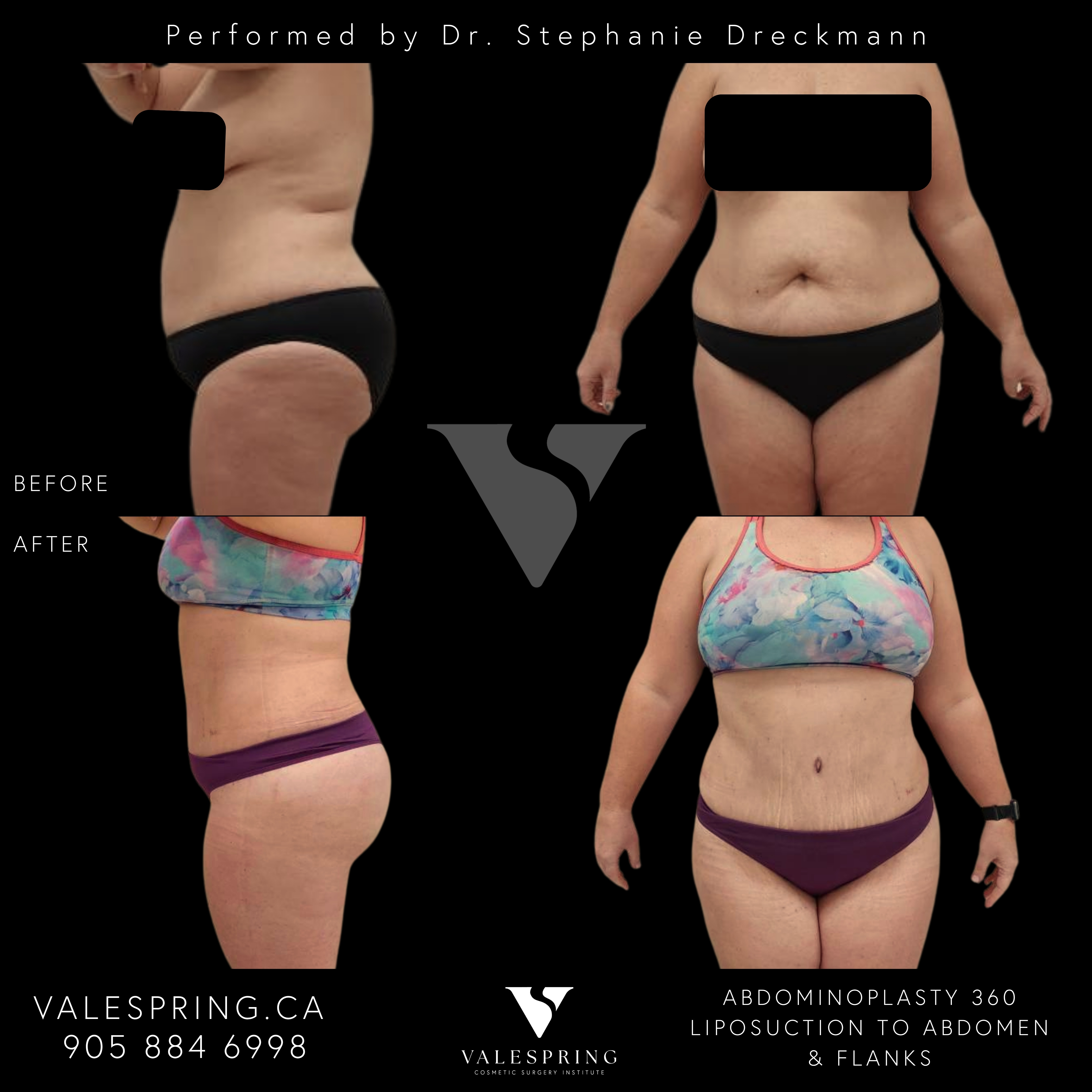
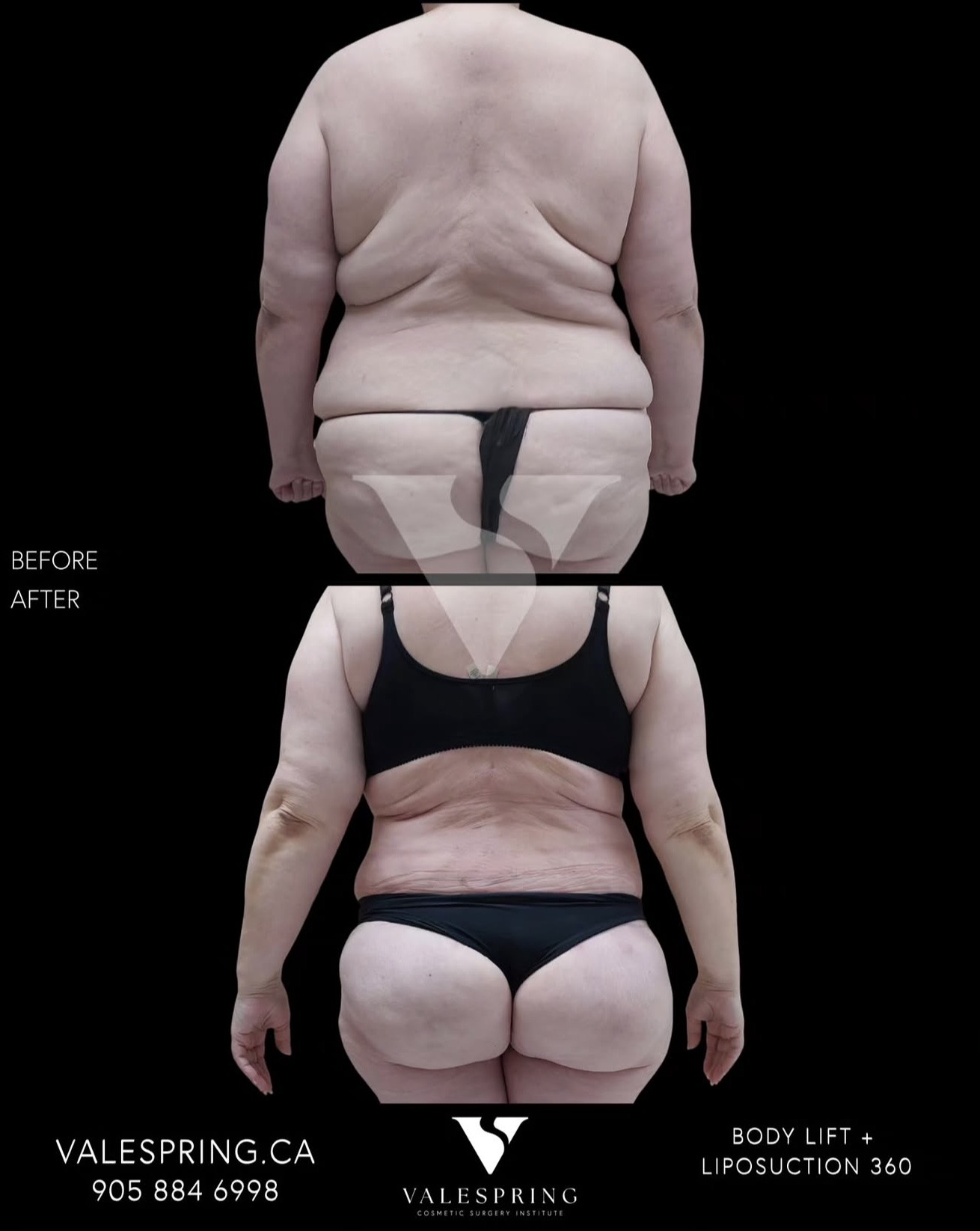
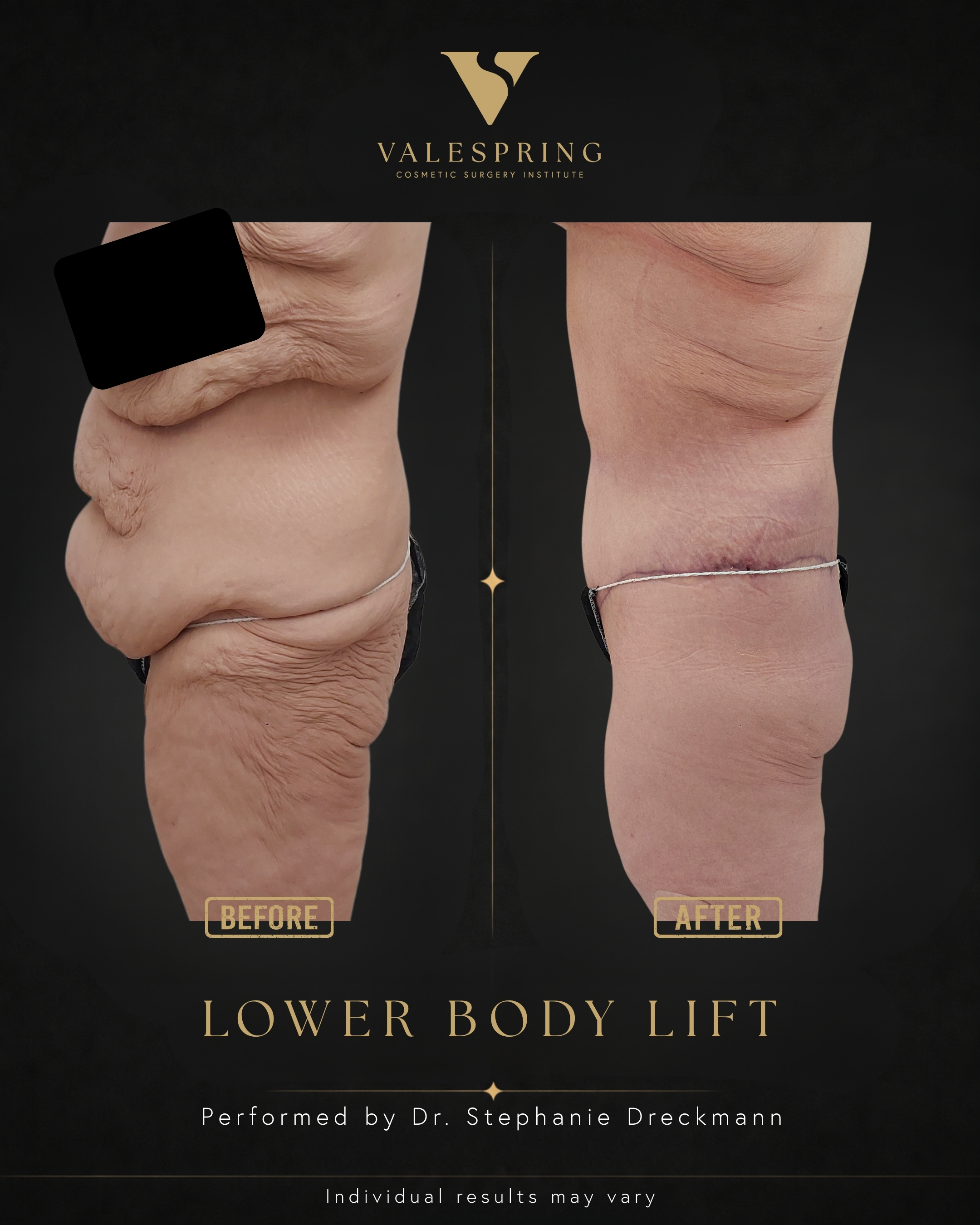
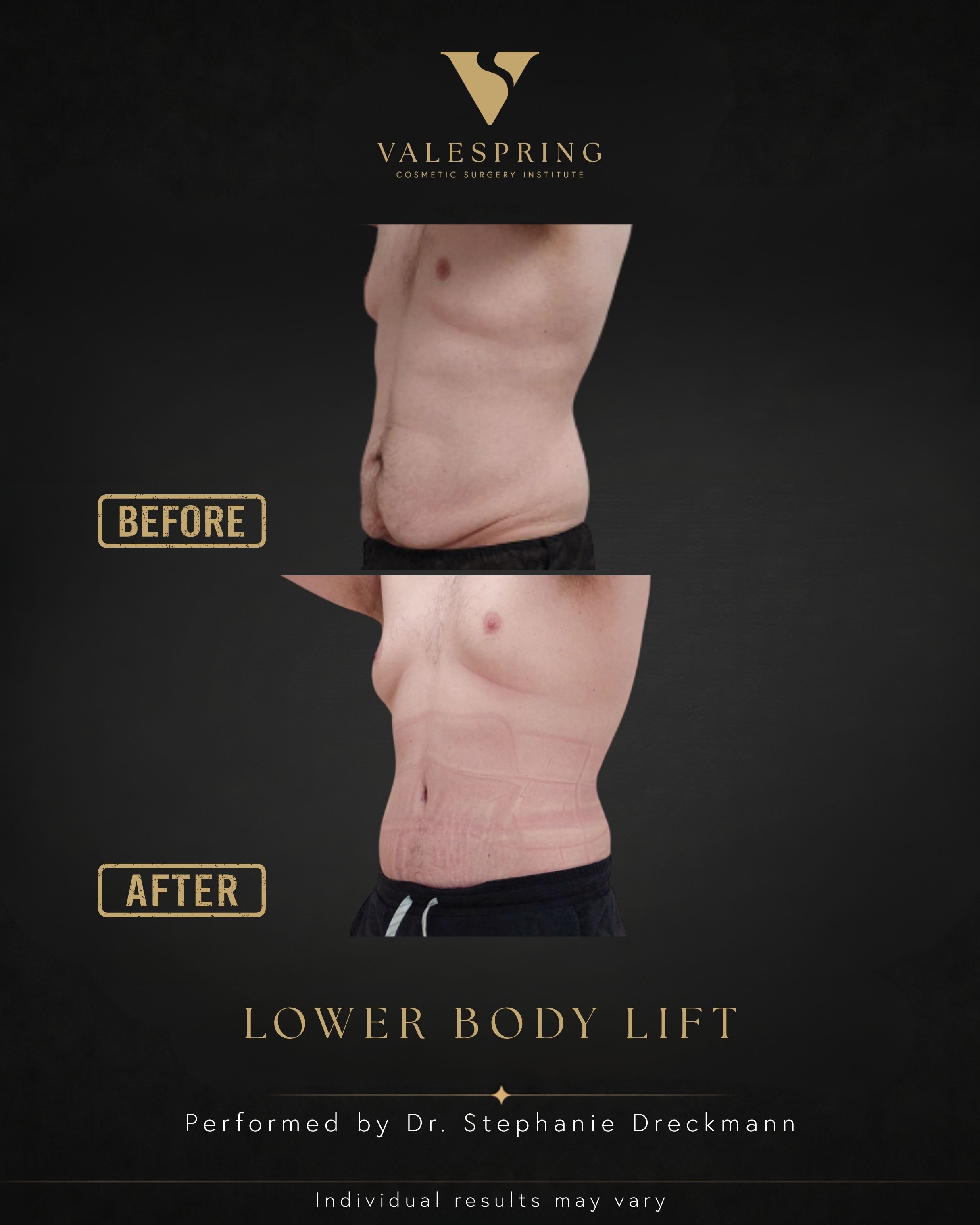
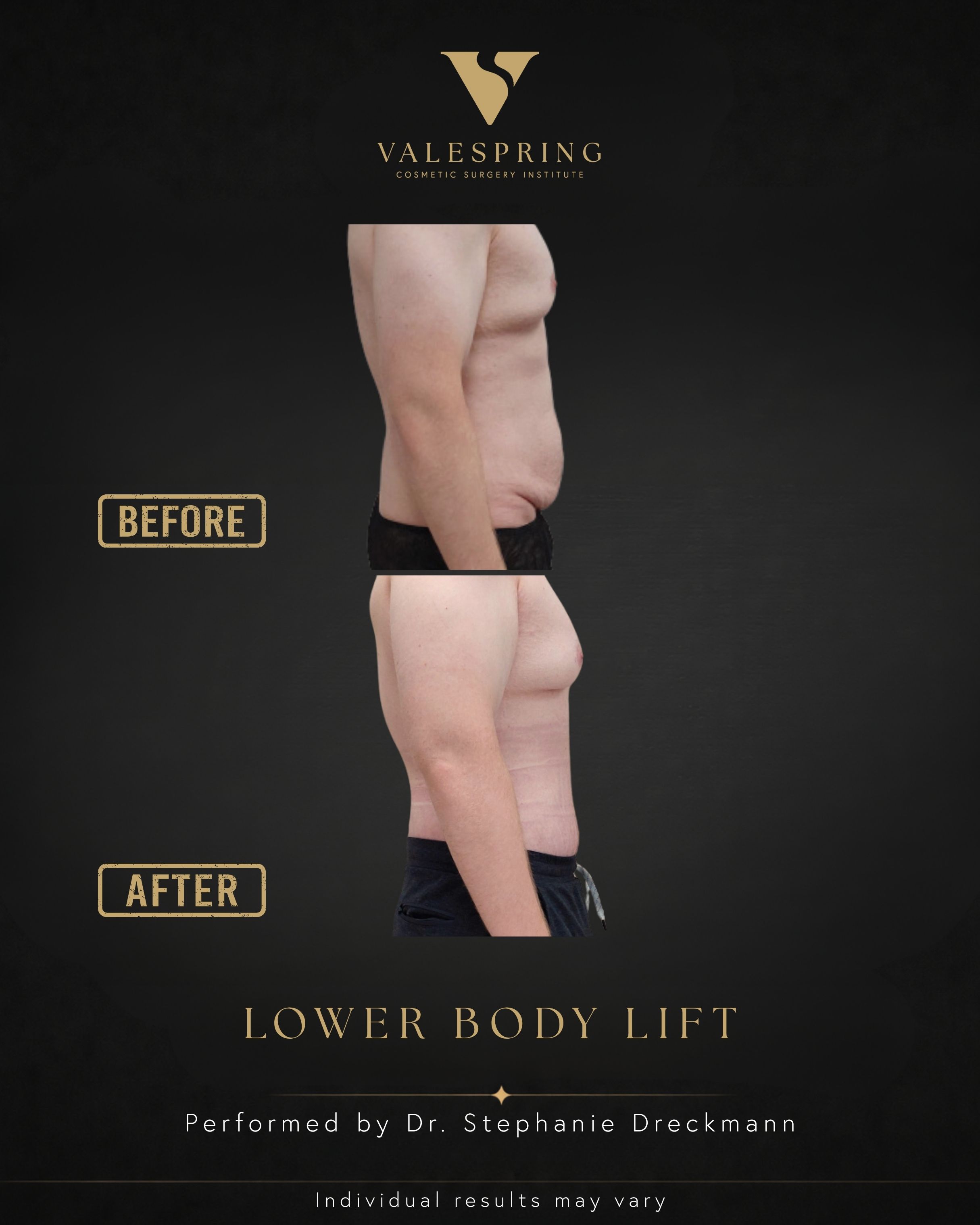
Some patients searching for “360 body lift before and after” photos are looking for a dramatic transformation. Before-and-after photos can help understand possibilities, but results vary based on anatomy, the amount of excess skin, scar placement, healing, and surgical planning. The best comparison is always with patients who have similar body type and skin laxity.
Patients can learn more about this type of surgery and see our body lift before and after photos on our Body Lift service page.
Combining a Body Lift with Other Procedures
A 360 body lift may sometimes be combined with other procedures, but this depends on the patient’s anatomy, health, goals, and the overall safety of the surgical plan. Post-weight-loss patients may have concerns in multiple areas, including the abdomen, thighs, arms, breasts, or back. However, not every concern should be addressed in one operation.
Staging is common in body contouring after major weight loss. This means procedures may be separated into different surgeries rather than performed all at once. Staging can help manage operative time, recovery, and overall safety while still working toward a larger body contouring goal.
For example, some patients may first address the torso with a body lift and later consider the thighs, arms, or upper body. Others may combine selected procedures when it is safe and appropriate. If inner or outer thigh laxity is a concern, patients may also want to learn about our Thigh Lift options.
During your consultation, Dr. Dreckmann can discuss whether a single procedure or staged plan is more appropriate. The goal is to create a plan that improves contour while respecting the patient’s healing capacity and overall safety.
Recovery and Results After a 360 Body Lift
Recovery after a 360 body lift is more involved than recovery after a smaller body contouring procedure. Patients should expect swelling, bruising, tightness, soreness, and temporary activity restrictions. Because the incision extends around the lower torso, movements such as standing fully upright, bending, twisting, or getting in and out of bed may feel limited at first.
Patients usually need help at home during the early recovery period. Time away from work depends on the extent of surgery, the type of work, and the patient’s healing progress. Desk-based work may require less downtime than physically demanding work, but every patient should follow the specific instructions provided by the surgical team.
Compression garments may be recommended to support the tissues and help manage swelling. Patients may also receive instructions about drains, incision care, sleeping position, walking, activity restrictions, and follow-up appointments. These instructions are important for healing and should be followed closely.
Results after a 360 body lift develop gradually. Early swelling can hide the final contour, and scars continue to mature over time. Patients may notice a significant change in body shape once excess skin is removed, but the final result can take months to settle as swelling improves and the tissues soften.
Considering a 360 Body Lift After Weight Loss?
A 360 body lift can be a powerful body contouring option for patients who have worked hard to lose weight but are left with loose skin around the lower torso. By treating the body circumferentially, the procedure can improve the abdomen, waist, flanks, lower back, and lower-body transition in a way that a tummy tuck alone may not achieve.
At Valespring Cosmetic Surgery in Richmond Hill, Dr. Stephanie Dreckmann performs body contouring procedures as part of an individualized surgical plan. During consultation, Dr. Dreckmann can assess whether a lower body lift, tummy tuck, thigh lift, or staged post-weight-loss contouring plan may be right for you.
To learn more, visit our Body Lift service page, explore our Tummy Tuck page, read our Tummy Tuck After Weight Loss blog, learn about Thigh Lift options, or view our Gallery to see examples of patient results.